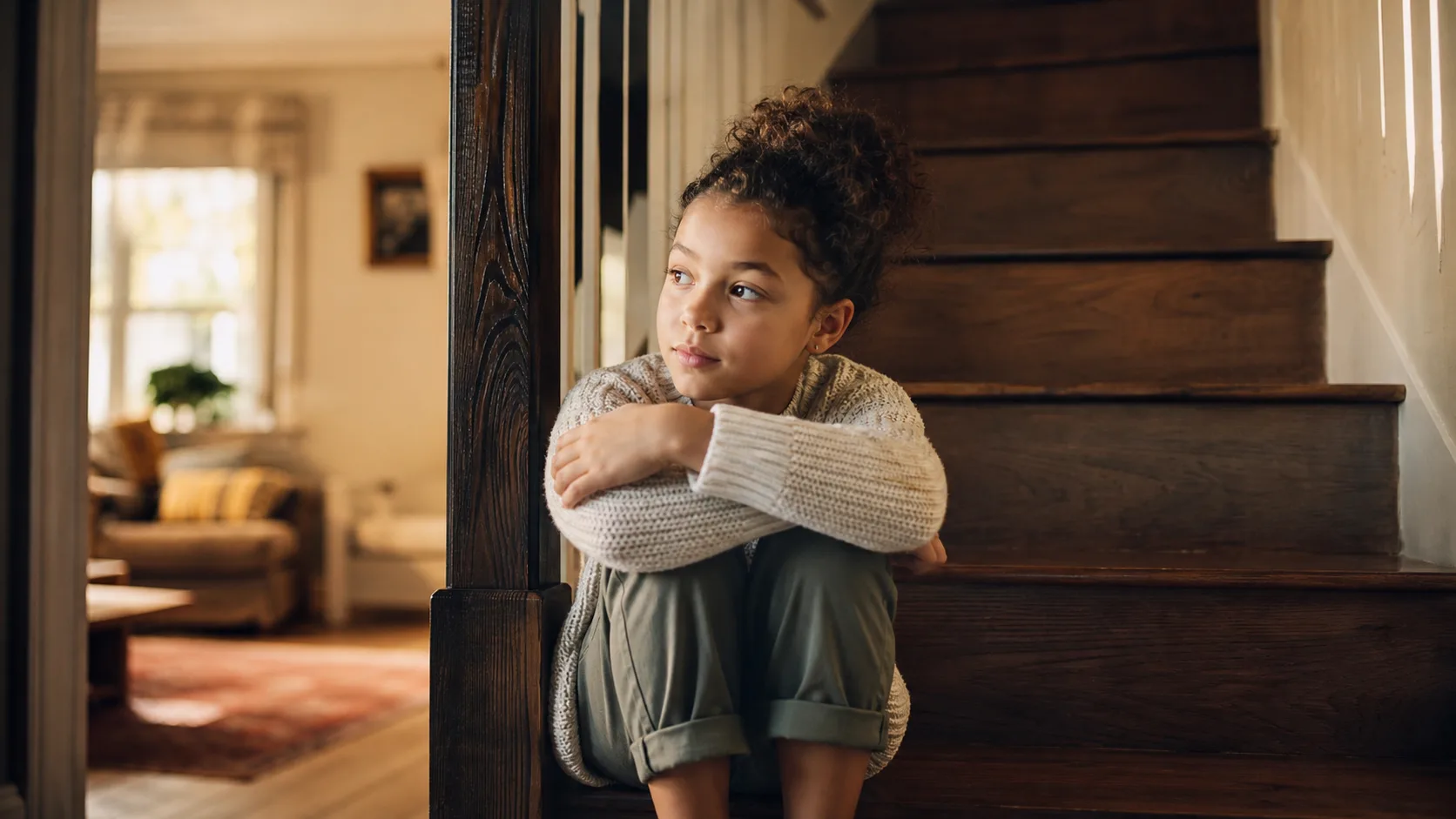
A child hears their parents arguing in the next room. They do not understand the bills, the relationship problems, or the other adult issues behind the argument. They understand the yelling. They feel the tension. And they wonder, *Are we okay?*
The argument may end that night. For some children, the emotional effects do not end there.
Growing up around frequent, intense, or unresolved parental conflict can affect children’s mental health and influence how they respond to stress and relationships later in life.
That does not mean parents can never disagree. Disagreements happen in healthy families too. The difference is often how the adults handle the conflict and whether the child continues to feel safe and secure.
How Parents Fighting Can Affect Children
When conflict at home becomes frequent or unpredictable, some children begin paying very close attention to everyone’s emotions.
They notice when Mom’s voice changes. They know when Dad is angry before he says anything. They may become quiet, hide in their room, act out, or work hard to keep everyone happy.
Research has found an association between interparental conflict and anxiety in children and adolescents. One meta-analysis involving more than 12,000 young people found a significant relationship between parental conflict and youth anxiety.
Children respond differently, but possible effects can include:
These reactions are not signs that a child is weak. They are often ways of adapting to an environment that feels unpredictable.
The Child Who Becomes the Peacemaker
Some children do not cry or misbehave when their parents fight.
They become helpful.
They comfort Mom. They try not to upset Dad. They take care of younger siblings. They become unusually responsible because they do not want to create another problem.
Everyone describes them as “mature for their age.”
But the child may quietly be learning:
It is my job to keep everyone happy.
Years later, that belief can show up as people-pleasing, difficulty saying no, poor boundaries, or guilt whenever someone is disappointed. Clinicians sometimes call this parentification — when a child carries emotional or practical responsibilities that belong to an adult.
When Childhood Patterns Follow Us Into Adulthood
You can leave your childhood home without leaving behind everything you learned there.
An adult who grew up around chronic conflict may become extremely uncomfortable with disagreement. A partner saying, “We need to talk,” might immediately trigger anxiety.
Others may struggle with:
This does not mean everyone who witnessed parental conflict will experience these problems. Mental health and adult relationships are shaped by many factors, including temperament, other supportive adults, community, and later life experiences.
Childhood experiences can influence us, but they do not determine our future.
Is It Harmful for Children to See Their Parents Disagree?
Not necessarily.
Children do not need parents who never disagree.
Seeing parents resolve disagreements respectfully can actually teach children something useful about relationships.
Imagine a child hearing:
“I’m frustrated, so I’m going to calm down before we continue this conversation.”
Or:
“I shouldn’t have spoken to you that way. I’m sorry.”
The child learns that people can disagree and still respect each other. They also learn that rupture is followed by repair — one of the most protective things a child can witness.
The greater concern is conflict involving repeated yelling, insults, threats, physical aggression, prolonged hostility, or putting children in the middle.
Constructive Conflict vs. Destructive Conflict
| Constructive Conflict Children Can Witness | Destructive Conflict That Harms Children |
|---|---|
| Calm or measured tone, even when frustrated | Yelling, screaming, or intimidation |
| Focus on the problem | Insults, name-calling, contempt |
| Taking a break when emotions escalate | Escalating until someone gives in |
| Visible apology and repair afterward | Silent treatment lasting days |
| Child is reassured they are safe and not at fault | Child is asked to take sides or carry messages |
| Disagreement ends in resolution | Same fight repeats indefinitely, unresolved |
| Physical safety is never in question | Any threats, throwing objects, or physical aggression |
Do Not Make Your Child the Messenger
One of the most difficult positions for a child is being caught between two parents.
“Tell your mother…”
“Ask your father why…”
“Don’t tell your dad I said this.”
“Whose side are you on?”
A child should not have to become the messenger, referee, therapist, or judge in an adult relationship.
When parents have problems with each other, those conversations belong between adults.
“Why Does My Childhood Still Affect Me?”
This is a question many adults ask.
You may have your own home, career, relationship, or children now. Yet someone raising their voice can still make your heart race. Silence after an argument may make you fear that someone is leaving.
Instead of asking:
“Why can’t I just get over it?”
Consider asking:
“What did I learn about love, conflict, and safety when I was growing up?”
Understanding where a pattern came from does not mean blaming your parents forever. It gives you the opportunity to decide whether that pattern still belongs in your life.
Breaking the Cycle
If you recognize yourself in this article, you are not destined to repeat your parents’ relationship.
Healthy communication can be learned.
You can learn to disagree without yelling.
You can set boundaries without feeling guilty.
You can stop assuming every disagreement means rejection.
A few places to start:
And if you are a parent, your children do not need you to be perfect. They benefit from seeing adults take responsibility, apologize, communicate respectfully, and repair relationships after disagreements.
Sometimes breaking a family pattern begins with one person deciding:
“I want to handle this differently.”
When to Consider Professional Support
Consider speaking with a mental health professional if childhood experiences or current family conflict are contributing to persistent:
If you are having thoughts of harming yourself, call or text the Suicide & Crisis Lifeline at 988.
How RayMex Wellness Can Help
At RayMex Wellness LLC, we provide psychiatric mental health evaluations and treatment for conditions including anxiety, depression, PTSD, ADHD, and mood disorders.
Our board-certified Psychiatric Mental Health Nurse Practitioner offers:
Understanding where an emotional pattern started can be useful. Learning what to do with it now is what changes your life.
**Request an appointment** or call 617-419-0482 to speak with our team.
Frequently Asked Questions
Below are straightforward answers to the questions we hear most often from parents and from adults revisiting what they grew up with.
---
This article is for educational purposes only and is not a substitute for professional medical advice, diagnosis, or treatment. Always consult a qualified psychiatric provider about your individual situation. If you are experiencing a mental health emergency, call 911 or the Suicide & Crisis Lifeline at 988. If you or your children are experiencing domestic violence, the National Domestic Violence Hotline is available 24/7 at 1-800-799-7233.