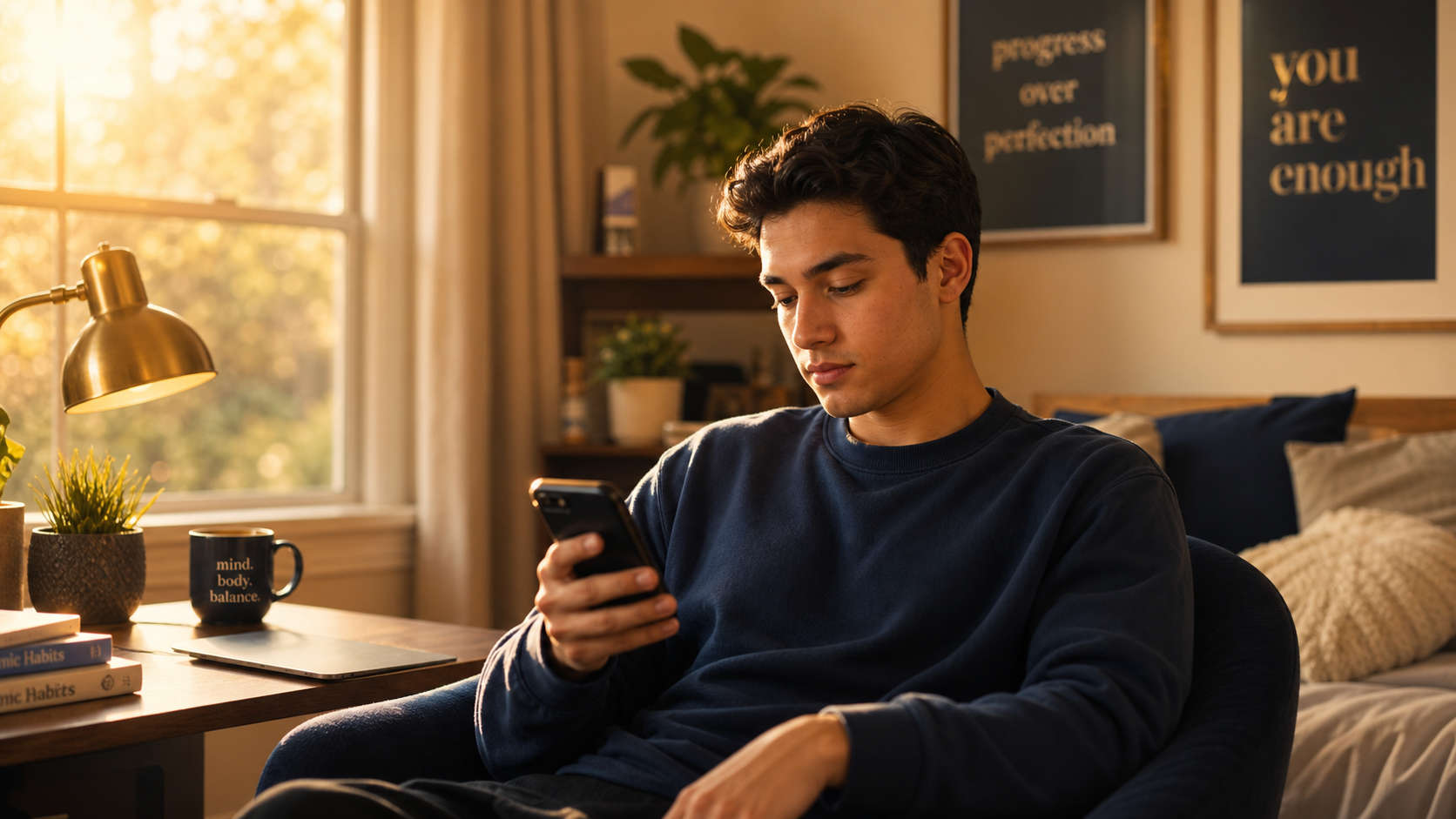
Most of us reach for our phones within minutes of waking up. We check notifications, scroll through a few videos, skim the news, or compare our morning to someone else’s carefully curated highlight reel. And honestly, there is nothing wrong with that—social media is woven into how we communicate, learn, and stay connected. But when that quick scroll starts to quietly shape how you feel about yourself, your sleep, or your ability to focus, it is worth stepping back and asking a simple question: is this helping me or hurting me?
As a psychiatric mental health nurse practitioner, I see patients every week whose anxiety, mood, and sleep patterns are tangled up with their social media habits—often without them realizing it at first. This is not about demonizing technology. It is about understanding how these platforms interact with your brain so you can use them on your terms.
What Does Research Say About Social Media and Mental Health?
The relationship between social media and mental health is not black and white. Research from institutions like the National Institute of Mental Health (NIMH), the American Psychological Association (APA), and the World Health Organization (WHO) paints a nuanced picture.
On the positive side, social media connects people across distances, builds supportive communities for those living with chronic illness or marginalized identities, and provides access to educational mental health content that was not widely available a decade ago. Platforms like YouTube and TikTok have helped normalize conversations about therapy, medication, and psychiatric care in ways that reduce stigma.
But the risks are real too. A 2023 APA advisory on social media and youth mental health noted that adolescents who spend more than three hours per day on social media face double the risk of depression and anxiety symptoms. Studies published in JAMA Psychiatry have found associations between heavy social media use and increased loneliness, disrupted sleep, and lower self-esteem—even after controlling for other variables.
The key takeaway? Social media is not inherently harmful. How you use it, how much time you spend on it, and what kind of content you consume matters far more than whether you have an account at all.
How Social Media Can Affect Your Mental Health
Let’s break down the specific ways social media can influence your emotional well-being. Not all of these will apply to everyone, but recognizing the patterns is the first step toward healthier habits.
Comparison Culture
This is one of the most common issues I hear about in my practice. You open Instagram and see a friend’s vacation photos, a colleague’s promotion announcement, or a fitness influencer’s transformation post. Rationally, you know that these are highlight reels. Emotionally, though, it still stings. You start measuring your behind-the-scenes reality against someone else’s curated best moments—and you come up short every time.
Research on social comparison theory consistently shows that upward comparison (comparing yourself to someone you perceive as doing better) is linked to lower self-esteem and increased depressive symptoms. The more time you spend consuming this content passively, the stronger the effect.
Fear of Missing Out (FOMO)
FOMO is not just a buzzword—it is a recognized psychological experience. Seeing friends at a gathering you were not invited to, coworkers at a networking event you did not know about, or peers hitting life milestones while you feel stuck can trigger genuine distress. FOMO activates your brain’s threat detection system. It tells you that you are being left behind, even when that is not true.
A study from the University of Essex found that FOMO is strongly associated with lower mood, greater life dissatisfaction, and compulsive social media checking—creating a cycle that feeds on itself.
Doomscrolling
Doomscrolling—the habit of endlessly consuming negative news and distressing content—picked up during the pandemic and has not slowed down. Your brain is wired to pay attention to threats, which is why alarming headlines are so hard to look away from. But prolonged exposure to negative content activates your stress response repeatedly, raising cortisol levels and keeping your nervous system in a heightened state.
If you have ever looked up from your phone feeling worse than when you picked it up but unable to explain exactly why, doomscrolling is likely part of the answer.
Cyberbullying
Online harassment and cyberbullying remain serious concerns, particularly for teenagers and young adults. Unlike in-person bullying, online harassment can follow you home and into every space where your phone goes. The anonymity of the internet lowers inhibitions, and cruel comments, public shaming, or targeted attacks can cause lasting emotional harm—including anxiety, depression, and in severe cases, suicidal ideation.
The Centers for Disease Control and Prevention (CDC) reports that nearly 16 percent of high school students experienced cyberbullying in the past year, with significantly higher rates among LGBTQ+ youth.
Sleep Problems
Scrolling before bed is one of the most common habits I ask patients about—and one of the most disruptive. Blue light from your screen suppresses melatonin, the hormone that regulates your sleep-wake cycle. But it is not just the light. Emotionally charged content—whether it is a heated comment section or a video that makes your heart race—keeps your brain in an active, alert state when it should be winding down.
Poor sleep does not just leave you tired. It impairs memory, weakens emotional regulation, and makes existing anxiety and depression symptoms measurably worse. Research from the National Sleep Foundation links evening screen use to longer sleep onset, reduced sleep quality, and daytime fatigue.
Information Overload
We process more information in a single day than people a century ago encountered in a month. Social media accelerates this. Between news updates, personal posts, advertisements, comment threads, and autoplay videos, your brain is constantly filtering, evaluating, and reacting. Over time, this cognitive load contributes to mental fatigue, difficulty making decisions, and a persistent sense of being overwhelmed.
Negative News Exposure
Beyond doomscrolling, even passive exposure to negative news through your feed can affect your mood. Algorithms prioritize engagement, and content that triggers strong emotional reactions—fear, outrage, sadness—gets pushed to the top. You do not have to seek out bad news for it to find you.
For individuals managing PTSD or trauma-related conditions, unexpected exposure to graphic or distressing content can trigger flashbacks, intrusive thoughts, or heightened hypervigilance.
Body Image
Filtered photos, edited videos, and unrealistic beauty standards are not new, but social media has amplified their reach and impact. A report from the American Academy of Pediatrics found that adolescent girls who spend more time on image-focused platforms report higher rates of body dissatisfaction and disordered eating behaviors.
This is not limited to young women. Men, nonbinary individuals, and people of all ages are affected by the gap between the bodies they see online and their own reflection.
Validation Through Likes
When a post gets a lot of likes or positive comments, your brain releases a small hit of dopamine—the same neurotransmitter involved in other reward-driven behaviors. That feels good, so you post again. But when a post underperforms or receives negative feedback, it can feel like a personal rejection. Over time, tying your sense of worth to external metrics creates a fragile foundation for self-esteem.
This pattern is especially concerning for adolescents whose identities and self-concepts are still forming.
Attention and Concentration
Short-form video platforms like TikTok and Instagram Reels deliver rapid bursts of novel content—usually 15 to 60 seconds each. This trains your brain to expect constant stimulation and quick rewards, which can make sustained attention on longer tasks feel uncomfortable or boring.
For individuals with ADHD, this effect is often amplified. The fast-paced, high-reward nature of social media can feel particularly engaging, making it harder to disengage and return to tasks that require sustained focus.
Signs Social Media May Be Affecting Your Mental Health
Sometimes the impact of social media sneaks up on you. Here are some signs that your digital habits might be affecting your emotional well-being:
If several of these resonate, that does not mean something is fundamentally wrong with you. It means your relationship with social media deserves some honest attention.
Who Is Most at Risk?
Social media affects everyone differently, but certain groups tend to be more vulnerable to its negative effects:
Teenagers and adolescents are still developing the parts of the brain responsible for impulse control, emotional regulation, and self-identity. Their self-concept is heavily influenced by peer feedback, making them especially sensitive to social comparison and cyberbullying.
Young adults and college students often face a perfect storm: academic pressure, social uncertainty, financial stress, and heavy social media use. Research from the American College Health Association shows that college students who report problematic social media use also report significantly higher rates of anxiety and depression.
People living with anxiety or depression may turn to social media for comfort or distraction, but passive scrolling tends to reinforce the very thought patterns—rumination, comparison, catastrophizing—that these conditions feed on.
Individuals with PTSD can be blindsided by triggering content that appears without warning. A news clip, a graphic video, or even a heated discussion can activate trauma responses.
People with ADHD often find social media uniquely compelling because of its fast-paced, high-dopamine design. The difficulty lies in disengaging—what starts as a five-minute break can turn into an hour.
Those struggling with low self-esteem or loneliness may seek validation online but find that the superficial interactions of social media do not fill the void of genuine human connection.
Healthy Ways to Use Social Media Without Hurting Your Mental Health
The goal is not to quit social media entirely—for most people, that is neither realistic nor necessary. The goal is to use it intentionally.
Set specific time limits. Most smartphones have built-in screen time tools. Start by tracking how much time you actually spend on social media, then set a daily limit that feels sustainable. Even reducing by 30 minutes a day can make a noticeable difference.
Curate your feed deliberately. Unfollow or mute accounts that consistently make you feel worse about yourself. Fill your feed with accounts that educate, genuinely entertain, or inspire you—not ones that leave you feeling inadequate.
Turn off non-essential notifications. Every notification is a small interruption that pulls your attention and triggers a micro-decision about whether to respond. Turning off everything except direct messages and urgent alerts reduces that cognitive load.
Stop scrolling before bed. Try setting a “phone curfew” 30 to 60 minutes before you plan to sleep. Leave your phone outside the bedroom if you can. Replace the scrolling habit with something that helps you wind down—reading, stretching, listening to music, or a short breathing exercise.
Schedule screen-free time. Build pockets into your day where your phone is physically out of reach. Meals, walks, and the first 30 minutes after waking are good places to start.
Use social media actively, not passively. Commenting on a friend’s post, sharing something meaningful, or messaging someone you care about is different from mindlessly scrolling. Active use tends to strengthen social bonds; passive consumption tends to weaken them.
Practice a quick check-in. Before you open an app, ask yourself: how am I feeling right now? After ten minutes, ask again. If the answer is “worse,” close the app. This simple awareness practice helps you build a healthier relationship with your phone over time.
Invest in offline relationships. No amount of social media engagement replaces the mental health benefits of spending time with people you care about in person. Make face-to-face connection a priority, even when it takes more effort.
When Should You Seek Professional Help?
There is a line between normal social media frustration and something deeper that deserves professional support. Consider reaching out to a mental health provider if you are experiencing:
If you are having thoughts of ending your life, please reach out to the Suicide and Crisis Lifeline by calling or texting 988.
Seeking help is not a sign of weakness. It takes real courage to say, “I need support with this.” A psychiatric provider can help you understand what is happening, identify contributing factors, and build a treatment plan that addresses the root of the problem—not just the symptoms.
How RayMex Wellness Can Help
At RayMex Wellness, we work with adults, young adults, and adolescents who are navigating the emotional effects of modern life—including the ways social media can amplify anxiety, depression, ADHD symptoms, and stress.
Our board-certified Psychiatric Mental Health Nurse Practitioner provides:
We do not believe in one-size-fits-all treatment. Your care plan is built around your specific situation, your goals, and what matters most to you.
If social media is affecting how you feel and you are not sure where to start, a conversation with a psychiatric provider can help you make sense of it. Schedule an appointment or call us at 617-419-0482.
Frequently Asked Questions
We hear a lot of questions about social media and mental health from patients and families. Here are honest, straightforward answers to some of the most common ones.
---
| Healthy Social Media Habits | Unhealthy Social Media Habits |
|---|---|
| Setting daily time limits and sticking to them | Scrolling without any sense of time passing |
| Curating your feed to include uplifting or educational content | Following accounts that make you feel inadequate or anxious |
| Engaging actively—commenting, messaging, sharing meaningfully | Passively consuming content without interaction |
| Putting your phone away 30–60 minutes before bed | Scrolling in bed until you fall asleep |
| Checking in with yourself about how social media makes you feel | Ignoring or dismissing emotional reactions after scrolling |
| Prioritizing in-person relationships and activities | Replacing face-to-face connection with online interaction |
| Taking regular breaks and screen-free days | Feeling unable to go more than a few minutes without checking your phone |
| Using social media to learn, connect, and create | Using social media primarily to compare yourself to others |
---
This article is for educational purposes only and is not a substitute for professional medical advice, diagnosis, or treatment. Always consult a qualified psychiatric provider about your individual situation. If you are experiencing a mental health emergency, call 911 or the Suicide & Crisis Lifeline at 988.