The morning you head back to work after months — or even years — at home with your children can feel like standing at the edge of something huge. Your heart races. You wonder whether your skills still matter. You worry about who your child will be without you there for every scraped knee and snack. And somewhere underneath it all, a quiet voice whispers, *Can I really do this?*
If that sounds familiar, please hear this first: you are not failing, and you are not alone.
Thousands of women return to work each year after taking time away to raise their families. This transition can bring excitement, pride, anxiety, guilt, and uncertainty all at the same time. That mix of feelings is one of the most human parts of returning to work after motherhood — and it deserves compassion, not judgment.
The truth is this: staying home to raise children is not a gap in your life. It is one of the most demanding leadership roles anyone can have.
Key Takeaways
Motherhood Builds Skills Employers Need
Many mothers quietly underestimate everything they learned outside a traditional workplace. But think about what parenting asks of you every single day:
These are not “just” soft skills. They are professional skills that translate directly into healthcare, education, business, management, customer service, and nearly every other field. The mother who kept a household running on a tight budget understands resource management. The one who coordinated appointments, meals, and activities understands project management. You have been leading a small, demanding organization — you simply were not getting a paycheck for it.
So when you update your résumé, do not apologize for the time you spent at home. Reframe it. That season built the exact qualities employers say they want most.
Why Returning to Work Can Feel So Emotional
Many women expect going back to work to feel exciting. Instead, they often feel overwhelmed — and then feel guilty for feeling that way.
Here is what the research tells us in plain language. A 2024 systematic review in *Archives of Women’s Mental Health* that analyzed 52 studies found that a mother’s well-being during her return to work is shaped by very practical things: workplace flexibility, supervisor and coworker support, the length of maternity leave, workload, childcare, and the tug-of-war between work and family life (Franzoi et al., 2024). In other words, when your workplace is supportive and flexible, you are far more likely to feel okay. When it is rigid and demanding, the stress adds up quickly. That is not a personal failing — it is a predictable human response to your environment.
Some of the emotions women commonly experience during this time include:
These reactions are common. They are not signs of weakness. They are signs that you care deeply about doing right by both your family and yourself.
The Mental Health Side of Returning to Work
Returning to work is one of the biggest life transitions many women ever go through, so it makes sense that it can affect your mental health.
A systematic review of 20 studies of U.S. working mothers found that the relationship between returning to work and mental health is complex — it can go either way. What tipped the scales, again and again, was work-family conflict: when the demands of work and home collided, mothers reported poorer mental health. Access to paid leave, a manageable workload, job flexibility, and coworker support all made a real, protective difference (McCardel et al., 2022).
It also helps to know the difference between the normal “baby blues” and something that needs more attention. The National Institute of Mental Health explains that perinatal depression — depression during pregnancy or in the year after birth — involves symptoms like persistent sadness, anxiety, or emptiness lasting more than two weeks, trouble bonding with your baby, changes in sleep or appetite, and difficulty concentrating. The Centers for Disease Control and Prevention reports that about 1 in 8 women with a recent birth experience symptoms of postpartum depression, and that it is common, serious, and very treatable.
Your mental health deserves the same attention as your physical recovery. If persistent anxiety, sadness, panic attacks, irritability, poor sleep, or trouble concentrating start interfering with daily life, talking with a mental health professional can make a meaningful difference. Seeking help is a sign of self-awareness — not failure. You can learn more about anxiety treatment and depression treatment, and read about the many ways we support women’s mental health.
Practical Ways to Cope With Returning to Work
You cannot control everything about your workplace, but you can build habits and supports that protect your mental health. Here are strategies that tend to help mothers during this transition:
Small, consistent steps add up. You do not have to do all of this at once.
Employers Also Have a Role
Supporting mothers returning to work is not simply an act of kindness. It is good business.
Research consistently shows that workplace flexibility, supportive supervisors, gradual return-to-work programs, and family-friendly policies improve employee well-being and job satisfaction. The American Psychological Association has highlighted how chronic caregiving stress without enough support can lead to parental burnout — and how flexible arrangements and mental health resources help prevent it.
When organizations genuinely support parents, they tend to see:
If you have any ability to advocate for flexibility — a later start time, remote days, a phased schedule — it is worth the conversation. Supporting your mental health helps you show up well at work, too.
You Were Never “Just” a Stay-at-Home Mom
Society loves to celebrate promotions, degrees, and professional milestones. Yet raising children requires extraordinary dedication that rarely gets a certificate.
You taught emotional regulation before your child ever entered a classroom. You managed schedules that changed by the hour. You comforted nightmares at 2 a.m. You celebrated first steps and first words. You sacrificed sleep, personal time, and often your own needs so someone else could grow.
That work matters. It always has.
Motherhood is not time lost. It is time invested. So please retire the phrase “I was just a stay-at-home mom.” There is no “just” about it.
Taking Care of Yourself Matters Too
Many mothers spend years caring for everyone else before they finally ask themselves a simple question: *How am I doing?*
Your mental health matters. Your goals matter. Your career matters. And your family benefits when you are emotionally healthy — children learn how to care for themselves in part by watching a parent who does.
Whether you are returning to work after maternity leave, re-entering the workforce after several years at home, or simply searching for balance between career and family, you do not have to navigate this transition alone.
How RayMex Wellness Supports Mothers in Massachusetts and Rhode Island
At RayMex Wellness, we understand that major life transitions can shake your emotional well-being — and that mothers are often the last to ask for help.
Our board-certified psychiatric providers offer compassionate, evidence-based care led by a psychiatric mental health nurse practitioner (PMHNP). We help women with:
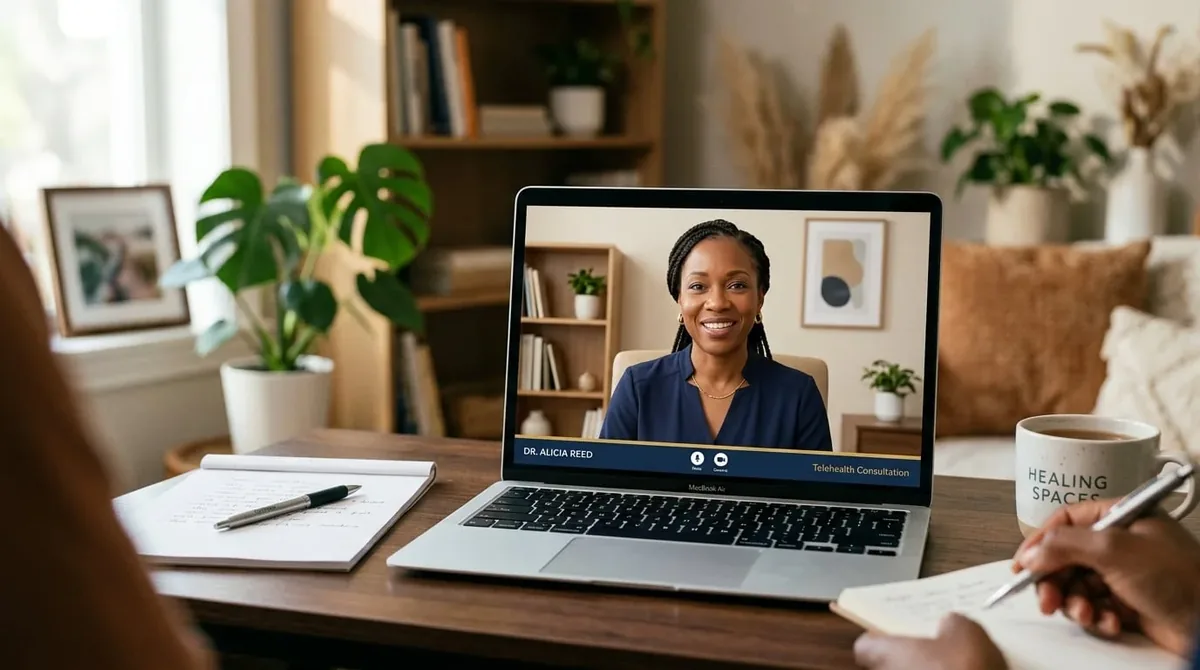
We provide all of this through secure, HIPAA-compliant telepsychiatry across Massachusetts and Rhode Island, so you can get real support without adding a commute to your already-full day. If returning to work feels overwhelming, reaching out can be the first step toward feeling like yourself again.
Your career is important. Your family is important. Your mental health is just as important.
You Don’t Have to Navigate This Transition Alone
RayMex Wellness helps women who are experiencing anxiety, depression, burnout, adjustment struggles, stress, and postpartum mental health concerns — all through secure telepsychiatry appointments across Massachusetts and Rhode Island. Whatever this season looks like for you, you deserve care that sees the whole picture.
Book an Appointment today, or Contact Us if you have questions and would like to talk with our team first.
Frequently Asked Questions
Is it normal to feel anxious about returning to work after having a baby?
Yes. Many women feel anxiety, guilt, or uncertainty when they return to work after motherhood. These feelings are common and are not a sign of weakness. Supportive workplaces, a gradual routine, and mental health care can all help you adjust and feel more confident.
Can returning to work affect postpartum mental health?
It can. Research shows the experience varies from person to person and depends on workplace flexibility, supervisor support, workload, access to childcare, paid leave, and any existing anxiety or depression. For some women the return brings relief and connection; for others it adds stress that deserves attention.
Why does returning to work after motherhood feel so difficult?
Going back to work is one of the biggest life transitions a woman can experience. You are adjusting to a new routine, managing work-family conflict, and sometimes grieving time with your child, all while your identity shifts. It makes sense that it feels hard — and difficulty does not mean you made the wrong choice.
How long does it take to adjust to working again after being home?
There is no single timeline. Many mothers start to feel more settled within a few weeks to a few months as routines take shape. If low mood, anxiety, or exhaustion keep getting worse instead of better, that is a good reason to check in with a mental health professional.
What are the signs of postpartum depression or anxiety when returning to work?
Warning signs include persistent sadness or emptiness, constant worry or panic, irritability, trouble sleeping even when the baby sleeps, difficulty concentrating, loss of interest in things you used to enjoy, or feeling disconnected from your child. Symptoms that last more than two weeks deserve a professional evaluation.
How can I cope with mom guilt about going back to work?
Mom guilt is incredibly common. It helps to remember that an emotionally healthy parent benefits the whole family, to focus on quality time rather than quantity, to build a reliable support system, and to talk openly about your feelings. If guilt becomes overwhelming or turns into anxiety or depression, therapy and, when appropriate, medication can help.
Is it normal to feel like I lost my identity after motherhood?
Yes. Many women describe feeling like they lost part of themselves during full-time caregiving. Returning to work can stir up questions about who you are now. This is a normal part of a major identity shift, and it is something a supportive mental health provider can help you work through.
Can therapy or medication help with return-to-work anxiety?
Yes. Evidence-based treatments such as therapy, and medication management when appropriate, can significantly reduce anxiety and depression tied to this transition. At RayMex Wellness, a board-certified psychiatric provider works with you to build a personalized plan that fits your life and goals.
When should I seek professional help?
Reach out if anxiety, sadness, panic attacks, or overwhelming stress last for several weeks or start to interfere with your work, relationships, sleep, or ability to care for yourself or your child. Seeking help early is a sign of strength, not failure.
Does RayMex Wellness offer telehealth for moms in Massachusetts and Rhode Island?
Yes. RayMex Wellness provides secure telepsychiatry for women across Massachusetts and Rhode Island, including care for anxiety, depression, postpartum concerns, stress, burnout, ADHD, PTSD, and medication management — all from the comfort and privacy of home.
References
1. Franzoi IG, Sauta MD, Barbagli F, Granieri A. Returning to work after maternity leave: a systematic literature review. *Archives of Women’s Mental Health.* 2024.
2. McCardel RE, Loedding EH, Padilla HM. Examining the Relationship Between Return to Work After Giving Birth and Maternal Mental Health: A Systematic Review. *Maternal and Child Health Journal.* 2022.
3. National Institute of Mental Health. Perinatal Depression. National Institutes of Health (NIH).
4. Centers for Disease Control and Prevention. Depression During and After Pregnancy.
5. American Psychological Association. The rise of parental burnout. *Monitor on Psychology.* 2021.
6. American Psychological Association. One year later, a new wave of pandemic health concerns for parents. 2021.
This article is for educational purposes only and is not a substitute for professional medical advice. If you are experiencing a mental health emergency, call 911 or the Suicide & Crisis Lifeline at 988.