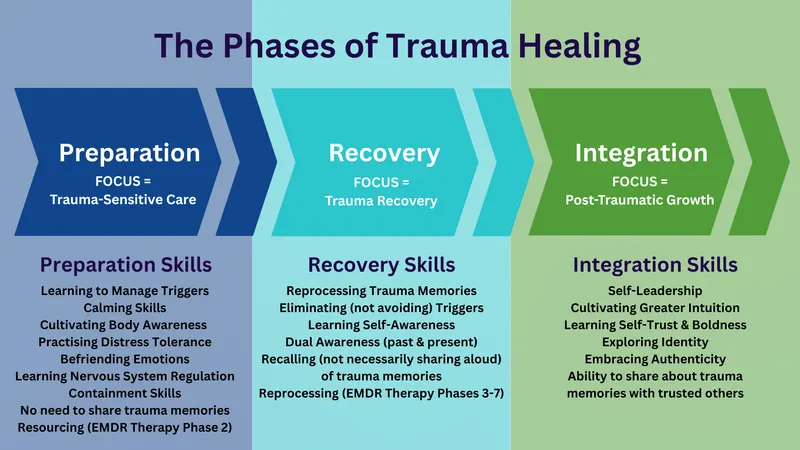
Trauma — whether from childhood experiences, adult events, or ongoing circumstances — can profoundly impact mental health and daily functioning. At RayMex Wellness, we provide compassionate, trauma-informed psychiatric care that honors your experiences and supports genuine healing.
Understanding Trauma
Trauma is not defined by the event itself, but by the individual’s response to it. What is traumatic for one person may not be for another. Common sources of trauma include childhood abuse or neglect, domestic violence, accidents or natural disasters, military combat, community violence, medical trauma, loss and grief, and systemic oppression and discrimination.
How Trauma Affects the Brain
Trauma fundamentally changes brain function. The amygdala (fear center) becomes hyperactive, the prefrontal cortex (rational thinking) becomes less active, the hippocampus (memory processing) may shrink, and stress hormones remain chronically elevated. These changes explain why trauma survivors may experience hypervigilance, difficulty concentrating, emotional reactivity, and intrusive memories.
Adverse Childhood Experiences (ACEs)
The landmark ACE study demonstrated the profound long-term impact of childhood adversity on physical and mental health. ACEs include physical, emotional, or sexual abuse, physical or emotional neglect, household dysfunction (substance abuse, mental illness, domestic violence), parental separation or incarceration.
Higher ACE scores are associated with increased risk of depression, anxiety, PTSD, substance use disorders, chronic health conditions, and relationship difficulties.
Trauma-Related Conditions
Post-Traumatic Stress Disorder (PTSD)
PTSD develops in some individuals following traumatic events. Symptoms include intrusive memories and flashbacks, avoidance of trauma-related triggers, negative changes in thoughts and mood, and changes in arousal and reactivity.
Complex PTSD
Resulting from prolonged, repeated trauma — often in childhood — complex PTSD includes additional symptoms like difficulties with emotional regulation, negative self-perception, and relationship challenges.
Trauma-Informed Psychiatric Care
Trauma-informed care recognizes the widespread impact of trauma and integrates this understanding into every aspect of treatment. At RayMex Wellness, our trauma-informed approach includes safety as the foundation, building trust through consistency and transparency, collaborative treatment planning, empowerment and choice in treatment decisions, and cultural sensitivity and awareness.
Treatment Approaches
Medication Management
For trauma-related conditions, medication can be an important component of treatment. SSRIs and SNRIs are first-line pharmacological treatments for PTSD. Prazosin may help with trauma-related nightmares. Anti-anxiety medications may provide short-term relief during acute distress. Mood stabilizers may be helpful for emotional dysregulation.
Therapeutic Integration
Our psychiatric care integrates evidence-based therapeutic principles including Cognitive Behavioral Therapy (CBT) approaches, Dialectical Behavior Therapy (DBT) skills, and mindfulness-based interventions.
The Healing Journey
Healing from trauma is not linear. There will be progress and setbacks, good days and difficult days. What matters is that you are moving forward with support and professional guidance.
Key principles for healing include being patient with yourself, building a support network, practicing self-compassion, maintaining consistent treatment, and celebrating small victories.
RayMex Wellness: A Safe Space for Healing
At RayMex Wellness, we understand that seeking help for trauma requires courage. We provide a safe, confidential, and compassionate environment where you can begin your healing journey at your own pace.
Our trauma-informed services are available in-person in Stoughton, MA, and via telehealth throughout Massachusetts and Rhode Island. Serving Boston, Brockton, Randolph, Canton, Quincy, Dedham, Springfield, Providence, Pawtucket, Warwick, and surrounding communities.
Contact us at 617-419-0482 or book online. Free 15-minute consultations available.
If you are experiencing a mental health emergency, call 911 or the Suicide & Crisis Lifeline at 988.